Under Fire at the Key - USMT
8/7/2026
Under Fire at the Key
Jesse H. Bunnell and the United States Military Telegraph, 1861–1864
"The electric telegraph was as essential to the command of an army as the horse was to its movement."
— Adapted from the observations of William R. Plum
Introduction
On the afternoon of June 27, 1862, the Union position north of the Chickahominy River was beginning to collapse.
Major General Fitz John Porter's Fifth Corps was fighting desperately at Gaines' Mill as Confederate assaults threatened to overwhelm the Union line. Roads behind the front filled with retreating wagons, artillery, wounded soldiers, couriers, and officers trying to maintain order amid the growing chaos.
Somewhere in that confusion was a seventeen-year-old civilian telegraph operator named Jesse H. Bunnell.
Separated from the headquarters to which he had been assigned, Bunnell discovered a military telegraph wire running beside the road. About one hundred yards behind him Union infantry were forming a defensive line. Without waiting for instructions, he cut into the wire, connected his portable instrument, sat behind a tree for cover, and called:
"Mc."
The headquarters operator of General George B. McClellan answered.
Within minutes, a functioning headquarters telegraph station had appeared in the middle of an active battlefield.
For the next several hours, dispatches passed through Bunnell's key while mounted couriers carried messages between his improvised station and General Porter. The Union army's command network, at one of the most critical moments of the Peninsula Campaign, depended in part upon a teenage civilian seated behind a tree under fire.
The episode became one of the best-known stories in the history of the United States Military Telegraph—but it was only one chapter in Bunnell's remarkable Civil War service.
Over the next three years he would serve with George B. McClellan, William S. Rosecrans, and George H. Thomas, operating telegraph stations from Yorktown to Atlanta while witnessing many of the war's defining campaigns.
A Civilian in Uniformed Headquarters
One of the most common misconceptions about Civil War military communications is that every wartime telegraph operator belonged to the Signal Corps.
Jesse H. Bunnell did not.
He served with the United States Military Telegraph (USMT), a civilian organization operating under the authority of the War Department and closely supervised by Assistant Secretary of War Thomas A. Scott and later by Anson Stager. Although certain senior officials held Quartermaster commissions for administrative purposes, the operators themselves remained civilian employees.
They carried no military rank.
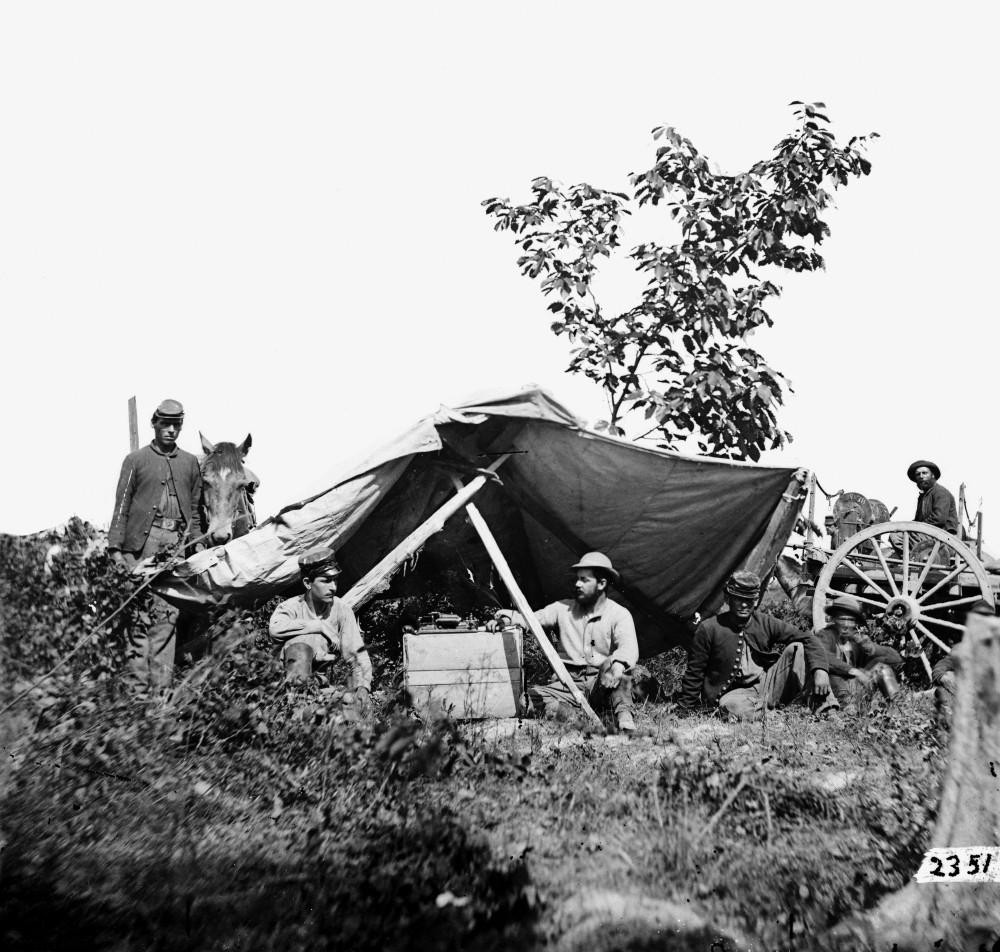
They nevertheless accompanied armies into the field, lived at army headquarters, operated confidential cipher traffic, and frequently worked within range of enemy fire.
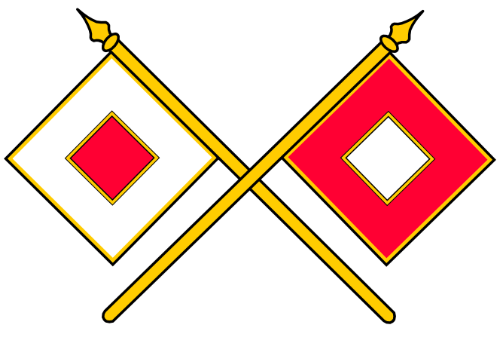
The Army Signal Corps and the USMT often worked toward the same goal—rapid communication—but they remained separate organizations. Signal officers communicated visually by flags, torches, and telescopes, while USMT operators maintained the growing electric telegraph network that connected headquarters, railroads, Washington, and field armies.
A Young Telegraph Operator Goes to War
Jesse H. Bunnell was born in Massillon, Ohio.
He learned telegraphy as a teenager while working in Ohio and western Virginia before entering government service shortly after the outbreak of the Civil War in April 1861, when he was only seventeen years old.
His first wartime assignments took him to Annapolis, Maryland, followed by Hampton, Virginia, where he helped operate military telegraph lines supporting Union operations around Fortress Monroe.
Telegraph operators advanced through demonstrated skill rather than age.
An operator had to copy Morse by sound, maintain circuits, troubleshoot electrical failures, identify stations by their calls, protect confidential information, and continue operating under exhausting conditions.
By early 1862 Bunnell's abilities had earned him an assignment to one of the most important telegraph offices in America:
The headquarters of the Army of the Potomac.
McClellan's Headquarters
During the Peninsula Campaign, General George B. McClellan established his headquarters aboard the steamer Commodore.
William R. Plum identifies A. Harper Caldwell, C. W. Jacques, and Jesse H. Bunnell as the headquarters operators serving McClellan during this period, with Caldwell acting as chief operator.
Every dispatch reaching army headquarters flowed through their instruments.
When Confederate forces evacuated Yorktown during the early morning hours of May 4, 1862, Bunnell happened to be alone on duty.
According to Plum, reports began arriving shortly after 2:00 a.m. announcing that the Confederate defenses had been abandoned. Bunnell immediately transmitted orders to corps commanders across the Army of the Potomac, reportedly sending traffic at nearly forty words per minute as the entire army shifted from siege operations to pursuit.
The telegraph transformed McClellan's response from one that might have taken hours into one measured in minutes.
Gaines' Mill
Less than two months later came the defining moment of Bunnell's wartime career.
On June 27, 1862, he had been temporarily assigned to General Fitz John Porter.
During the confused movement preceding the Battle of Gaines' Mill he became separated from headquarters and eventually encountered an active military telegraph line.
According to William R. Plum's 1882 history, Bunnell immediately cut into the wire and called McClellan's headquarters.
Once communication had been established, McClellan instructed him to stop the first mounted officer passing the station and direct him, in McClellan's name, to inform Porter that fifteen mounted orderlies were needed immediately.
Porter complied.
Throughout the afternoon Bunnell transmitted dispatches while mounted couriers carried messages between his station and Porter's headquarters.
Plum's dramatic account describes bullets striking nearby trees, artillery exploding around the station, and several couriers reportedly being killed while carrying dispatches.
These vivid details come from Plum's postwar narrative and should be understood as his recollection rather than contemporary battlefield reporting.
Regardless of the embellishments common in nineteenth-century military histories, the central event is well documented:
A teenage civilian operator established and maintained communications between Porter and McClellan during one of the Army of the Potomac's most desperate battles.
Antietam
Bunnell remained with McClellan through the Maryland Campaign.
Plum records that Caldwell, Bunnell, and J. H. Emerick served among the headquarters operators during the advance toward Antietam.
After the battle their work changed dramatically.
Thousands of telegrams poured northward while anxious families flooded military headquarters with requests for information concerning missing husbands, sons, and brothers.
According to Plum, the operators worked almost continuously attempting to locate wounded or missing soldiers by sending couriers through camps and hospitals.
The military telegraph had become more than a military instrument.
It had become one of the only links between grieving families and an army scattered across one of the bloodiest battlefields in American history.
The Army of the Cumberland
In 1863 Bunnell transferred west.
He joined General William S. Rosecrans and the Army of the Cumberland alongside operators John C. Holdridge and Robert M. Talbot.
During the Tullahoma Campaign, telegraph construction crews carried approximately one hundred miles of wire behind the advancing army.
Stations appeared almost immediately wherever Rosecrans established headquarters.
As the army advanced through Middle Tennessee, telegraph offices opened successively at Fosterville, Wartrace, Tullahoma, Decherd, Winchester, and beyond.
The electric telegraph advanced with the army.
Chickamauga
The Chickamauga Campaign demonstrated both the flexibility and danger of field telegraphy.
John C. VanDuzer, superintendent of military telegraphs for the Army of the Cumberland, reported that telegraph stations were established behind the headquarters of Rosecrans, George H. Thomas, and Gordon Granger during the campaign.
VanDuzer specifically praised Bunnell and several fellow operators for their:
"active, intelligent and fearless conduct."
After Union headquarters withdrew from the Widow Glenn house, operators attempted to establish new stations farther to the rear while Confederate attacks continued.
Plum recounts that one emergency office operated from a tree stump while another was hurriedly opened near the Rossville Road as fighting approached.
One memorable story preserved by Plum tells of operator John Holdridge searching unsuccessfully for a bayonet to drive into the ground so a proper electrical connection could be made before the position had to be abandoned.
The story illustrates the reality of Civil War field telegraphy.
There were no purpose-built headquarters.
Sometimes a tree, a stump, or even the earth itself became the foundation of the Union Army's communications network.
Chattanooga
Following Chickamauga, Bunnell remained with the Army of the Cumberland during the defense of Chattanooga.
When Union forces finally broke Confederate positions during the battles for Orchard Knob, Lookout Mountain, and Missionary Ridge, military telegraph operators worked continuously forwarding official dispatches, newspaper reports, and casualty information northward.
The war was being fought not only with rifles and artillery, but with wire.
George H. Thomas
One surviving wartime document provides especially valuable confirmation of Bunnell's position.
A cipher telegram dated March 31, 1864, carrying instructions from Lieutenant General Ulysses S. Grant to William T. Sherman, was addressed directly to:
J. H. Bunnell
The surviving telegram identifies him as the telegraph operator attached to General George H. Thomas and the Army of the Cumberland.
It is a rare surviving contemporary document that places Bunnell directly within the command structure of the western armies.
Kennesaw Mountain
As Sherman advanced toward Atlanta, telegraph wires stretched across the entire Federal front.
During the assault on Kennesaw Mountain on June 27, 1864—exactly two years after Gaines' Mill—Bunnell operated the telegraph at Thomas's headquarters.
Years later, in his memoir General Thomas and the Telegraph Operator, Bunnell recalled carrying telegraphic conversations between Sherman and Thomas during the battle.
Looking back three decades later, he believed Thomas had opposed the costly frontal assault and remembered observing visible reluctance and sadness in Thomas's expressions as reports of casualties reached headquarters.
These observations represent Bunnell's personal recollections rather than contemporary transcripts, but they provide an exceptionally rare glimpse into life inside an active Civil War headquarters.
Few participants stood closer to the machinery of command than the telegraph operator.
The End of His Service
Throughout the Atlanta Campaign, telegraph stations followed Thomas's headquarters from position to position while Confederate artillery occasionally shelled the surrounding area.
According to Plum, one shell killed an orderly near headquarters.
On August 16, 1864, Jesse H. Bunnell resigned from the United States Military Telegraph on account of ill health.
William R. Plum later described him as one of the service's:
"ablest and bravest operators."
His replacement at Thomas's headquarters was Richmond Smith.
Although Bunnell left the service before Atlanta finally fell, his wartime career had already carried him through some of the Civil War's most important campaigns.
After the War
Following the war Bunnell remained deeply involved in telegraphy.
He founded J. H. Bunnell & Company, whose telegraph keys and instruments became some of the most widely recognized in the United States.
For decades afterward, railroad operators, commercial telegraphers, and amateur radio enthusiasts would know the Bunnell name.
The same practical skill that had enabled a teenage operator to establish communications behind a tree at Gaines' Mill eventually helped shape the telegraph industry itself.
Legacy
Jesse H. Bunnell never commanded troops.
He never held military rank.
He never became famous in the way Grant, Sherman, Thomas, or McClellan did.
Yet for more than three years, critical military communications passed through his hands.
At Gaines' Mill he connected a battlefield headquarters under fire.
At Chickamauga he continued operating while headquarters withdrew.
At Kennesaw Mountain he sat beside George H. Thomas during one of the Atlanta Campaign's defining battles.
His story reminds us that the Civil War was not won solely by generals or infantrymen.
Behind every successful campaign stood an invisible network of engineers, railroad workers, signalmen, telegraph operators, and civilian specialists whose work made modern warfare possible.
Jesse H. Bunnell was one of those men.
He was, quite literally, the man at the end of the wire.
Sources
Primary Sources
-
Plum, William R. The Military Telegraph During the Civil War in the United States, Vol. I (1882).
https://archive.org/details/militarytelegraph01plumrich -
Plum, William R. The Military Telegraph During the Civil War in the United States, Vol. II (1882).
https://archive.org/details/militarytelegraph02plumrich -
Bunnell, Jesse H. "General Thomas and the Telegraph Operator," in Under Both Flags (1896).
https://archive.org/details/underbothflags00vick
Archival Sources
-
West Virginia & Regional History Center — Jesse H. Bunnell Papers.
https://archives.lib.wvu.edu/ark:/99999/187729 -
The Huntington Library — Decoding the Civil War Project (Military Telegraph Collection).
https://decodingthecivilwar.wordpress.com/
Additional Reading
- Thompson, George Raynor. The Signal Corps: The Test (United States Army in the Civil War). U.S. Army Center of Military History.
https://history.army.mil/html/books/030/30-17/